Portugal – USA
January 5, 2011
US politics are based on a master piece of constitutional law that resembles the master idea of Schuman and Spinelli, during the days when federalism was seriuously discussed in Europe on the basis of the Monet method of integration.
Portugal has a system of government that tried to recreate the french model of semi presidential(ism) from the mistakes and shortcomings of the I Republic, between 1910 and 1918, or 1923.
Portugal presents absolutely no political stability. The US model is a very predictable system of negotiations between the President and the opposition in Congress. Everybody, may they be involved and informed in politics or not, more or less know what to expect, in terms of results, based on a clear executive agenda. The presidential agenda may turn left or right on a certain issue, depending on the opposition realism of the facts. Obama may accept to review the health care bill, in exchange for something palpable for the american electorate to grasp: for instances, to accept the sustainability of taxation proportional over declared income.
In Portugal, in face of the facts of a recession, one sees a stronger reflex from the government to keep the status quo: The Prime Minister may overturn the Budget, the whole agenda based on a external, impalpable forseen threat, and confuse the electorate by threatening to unblock the negotiations on fast trains, driving the publics atention away from the real problems.
The US is a market based system: the financial markets, although under siege for lack of regulatory ties, they are able to easily predict and speculate on the trade and price trends, thus influencing the real political issues and setting the terms for political negotiations.
Portugal, during economic crisis, hides behind the intangible called obbligations towards European partners, fleeing the publics scrutiny, over the true complex nature of technical issues that evade most peoples understanding, leaving the citizens no other option but to accept disempowerement and isolation from the decision making process at home.
The solution to our problems in Portugal does not necessarily require a revolution. The reason why there is a mandated alternating party system is precisely to eat off any discontempt and throw sand on peoples eyes, so that the system perpetuates itself without structural change. Revolution did not mature the people in 74-82 to actually implement and execute a constitutional democracy in Portugal. A Glasnost and Prestroika also would not work, since it is a top-down method of policy enforcement, which has only one factor in common with our pathway to effective change: international pressure.
In Portugal pressure to change will come from a gradual replacement of our out dated development paradigms, such as our school teaching deeply inrooted model based on our past military achievements. Our priorities as to what defines us and makes our identity unique must surely change now. Our past historic successes ground us in our development as a people and perpetuate the old and paralysing political status quo.
Portugal may not rely on the Media to change mentalities and help build the future. Media is weak and spineless in Portugal. They merely report facts, on a small scale, and are not equiped to challenge the powerfull. Also, as a consequence, Media does not make politics and is not an agent of change. Media does not propose an alternative interpretation, does not promote models of analysis and does not reach out to the communities. So, its not a viable empowerement tool.
When Gutteres opened the precedent of resigning midway through his mandate, he was totally rejected by his own party, without exception, and no media ever resonated to its fullest such cowardly mass objection. This consensual and massive internal rejection showed how deeply immature our democracy in Portugal is. The party opposed the resigning Prime Minister and no corruption accusation had been or has ever since been raised against Guterres..However, guilty of breaking the Stability Pact or not, no Chief of Government ever had resigned in such a seemingly innocent way, since the beggining of constitutional democracy. The country, like today still completely isolated from policy making, ended up attacking the resigning head of government, siding by the party in power, giving them a new, clean, spotless confidence vote to restart and pick up where Guterres left from.
Guterres understood well the times ahead and launched an intelligent campaign pro-education, copying his European allies trend back then, like Blair and Schroeder, back to back with the last phase of German reunification and the Portuguese Presidency after Maastricht. This was the best idea we ve had so far, since Verney and other portuguese iluminists inspired the Marquis of Pombal in setting up the state controled education outside of the church.
In short, Portugal will change when expats from other parts of the world return with capital, new ventures, mindset, and start engrossing the class of a resident minority, up until recently represented in Portugal by personalities like Champalimaud, to change the “rational ignorance” of voters, the mentality of teaching politics from a Kissinger and European political elite points of view, and start introducing political analysis from a instiutionalist and masses or game theory points of view. At least start where others left, even if its been done and replaced.. Only then will irresponsible and corrupt governments stop from being nominated, elected and supported. Only then will these winds of change become mainstream and will voters and citizens become politically responsible and empowered.
Durao Barroso also saw this and, coherent with his youth leftist political influences, he idealized (and succeeded) to become a personality who, vested in a very particular role of being “anational”, but still very much a patriot and even extending his influence to other similar and possible future allies to Portugal, as is a EU Commission President traditionally expected to be, he steped aside from national politics, criticised by his own party, and country. The only difference between Barroso and the expat-role-model-country-saver, is that no one can tell how much he believes in a fast-track top-down solution for Portugal, much like Gorbachew in 1985.
The question is whether such a cultural revolution needs to take place by trial and error in several local communities simultaneously or whether it can happen in the two main cities in Portugal, considering Portugal cyclopic geographic vocation (Lisboa-Porto) ?
I dont necessarily think a Federal State is more prone to economic and political stability, but if we are to change our economic structures to promote political stability, no doubt would be better to attend the different regions in the country according to its owns specificities, to avoid a mono-culture type of specialization in software, like former bubble Ireland, and be able to diversify according to each regions competitive needs.
Portugal lies on the hopes and successes of the ever growing community of expats, immigrants and international capital.


 Generacion Y
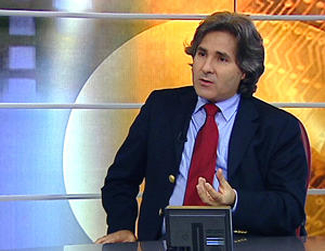 Futuro Presente
 Hitchens- political opinion maker
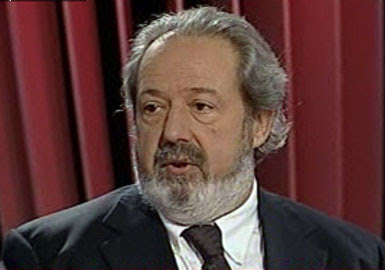 Jose Pacheco Pereira
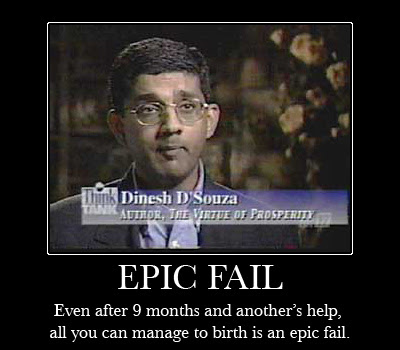 Dinesh D'Souza Christianity and Politics


 Seed Newsvine


 Oude Zak 000