Weekend Program
January 19, 2011
Im off to Nuclear Cowboyz with my son to see a show of lights and sounds on bikes.
According to their add, its a concept that mixes medieval josting with pyrotechnics.
Something to look forward to..(not?)
Oh well, Im not saying this is not the natural sequel to Monster Trucks, Monster jam, but still..I guess its better than a Baseball game!
i ll let the picture speak for itself..(dont forget: buy ear plugs for both!)

IFEX- Tunisia Monitoring Group
January 17, 2011

Back in June 2010, on its seventh mission, IFEX -TMG ( The International Freedom of Expression Exchange- Tunisia Monitoring Group), released a report with 18 recommendations against Tunisia situation on political freedom. IFEX is a global network, comprising over twenty different organizations worldwide, dedicated to denouncing violations on human rights and freedom of expression, statewide and international. IFEX HQ is in Canada and the Organization was launched officially in 1992.
According to their own website, the Tunisia Monitorig Group was the most successfull mission so far: Monitoring & Advocacy in Support of Independent Human Rights Defenders in Tunisia (funded by European donors).
After it was announced that the UN World Summit on INformatin Society was being hosted in Tunisia in 2003 for 2005, given the well known human rights violation historic on this country, immediately freedom advocacy groups started taking action.
The background scene is a country with a dictatorship that rules over 2 generation long, being the incumbent only the second head of State in power, after independence (now in exile since the day before yesterday, in Rhiad). There are only three opposition media sources (newspapers): Al Mawkif, Tariq Al-Jadid and Mouwatinoun.
And to get the state subsidies they need to submit their advertising publishing criteria to the States censorship. One editor tried to claim reparations through the courts on a slur campaign from one of the pro-government, aligned newspaper (the state controled media does not need to advertise), but none of the complaints followed through in the courts.
Other red flags included parliamentary sessions tv broadcast shut down right before the opposition poses their questions. Newspapers editions have been seized and their distribution is limited to a few controlled kiosks.
Drop all charges against journalist Fahem Boukadous (alledged guilty of public inciting riot in Jan 2010)
release detained political prisioners that did not use violence of force
end persecution on former politica prisioners and their families
end practice of indiscriminated prossecution for fabricated accusations on the cultural and intelectual elite
repeal any laws that criminalise the use of peaceful freedom of speech, assembly and association (including the right of defamation)
Review 2003 legislation o anti terrorist measures, according to the UN 2010 Recommendations, lifting sanctions on human rights
Ensure the prisoners treatment goes according to the ANti Torture Convention ratified already by the State
Grant legal registration to Tunisian legitimate non governmental organizations
Stop restricting access to the Internet (allow journalists and activists access to information, including traveling, regarless of their politcal color)
Grant the Council the means to manage the magistrates career.
New Websites and video sharing:
http://www.lematindz.net (Algeria)
http://www.elwatan.com (Algeria)
http://www.aafaq.org (USA)
http://www.kalima-tunisie.info
The Initiative for an Open Arab Internet http://www.openarab.net/
On its present edition, IFEX website expresses concern that the current martial law instate in Tunisia might undermine the freedom of access to the information on the internet that would otherwise be openly censored. Although two bloggers accused of reporting on the riots have been already released,the international community, namely the International Federation of Journalists, is calling on the imediate release of Fahem Boukadous, under arrest since 2008 for reporting protestes in Gafsa. Radio Kaima journalists are still arrested and the Tunisian Bar Association, peacefully protesting for freedom of the judicial processes, have been reported dispersed by brutal police action.
Altogether more than 60 killings have been confirmed over the the protests against government corruption.
The Egiptian Organization for Human Rights , representing over 25 human rights organizations in the region calls fro the European Union suspension of talks with Tunisia about the ongoing negotiations for preferential treatment in commercial transactions withing the framework of Euro-Mediterranean Association Agreements.
On a first analysis, freedom of expression has been used to ignite the social unrest, motivated by unemployment and the rise of commodities prices, through the informal use of online social networking tools, still under strong surveillance, as reported by IFEX, RSF (Reporters Without Borders) and IFJ (International Federation of Journalists), seconded by information divulged by CPJ (Committee to Protect Journalists):
CPJ research shows that the Tunisian Internet Agency is “modifying web pages on the fly to steal usernames and passwords for sites such as Facebook, Google and Yahoo!,” deleting or compromising accounts and even using the information to locate bloggers and their network of contacts…In response to the government’s heavy-handedness online, rival attacks organised from abroad by the “hacktivist” group Anonymous (tagged on Twitter as #optunisia), hit Tunisian state-run websites early in the year, including those of the President, Prime Minister, the stock exchange and several ministries, reports Index on Censorship. (in Ifex.org).
According to the EFF (Electronic Frontier Foundation) Slim Ammanou, cyber activist (now released) had been arrested for alerting the world to his whereabouts at the Tunisian Ministry of the Interior using Google Latitude
Ratified in 1969 the International Covenant for Civil and Political Rights (ICCPR). The ICCPR underscores in Article 14 the necessity of State parties to uphold the independence of the judiciary so as to ensure the proper administration of justice.
Tunisia leader thrown down by a mass protest started on Facebook
January 16, 2011
According to “Foreign Policy” online edition of January 14, the opposition formed from within the civil society in Tunisia, had no reported islamic presence. Unlikely as it might seem, considering that Ben Ali, who fled the country leaving the power with interim Head of Parliament, had since 1987, on its rise as head of State, oppressed and alienated all islamic presence from public life. Much like all his predecessors. Ben Ali refered to, by the title of a report in Arabic Network for Human Rights Information, online, as the “Arabic Pinochet”.
The Islamic Al-Nhada party, has most of his prominent leaders living in exile and in fact had to form an unlikely coalition with communists to prevail in the scene. Tunisia is rooted in a highly pan arabian patriotic yet secular regime, ever since Habib Bourguiba, the post colonial Tunisia’s equivalent of Ataturk, in Turkey.
The protesters that fled to the streets were mostly unemployed people, protesting against nepotism and lack of freedom of speech. Unions, Intelectuals and youth without any religious bias came to voice their concerns, from Sidi Bouzid to Tunis.
Ben Ali was forced to make concessions, such as promising to leave power in 2014 after 23 years ahead of the government. But after 70 were killed by the regime police, not even the further promise of stepping down in 6 months stopped the crowd, forcing him to flee to Malta.
When the protesters took the streets in Sidi Bouzid, the international community was focused on the celebrations of New Years Eve and after that on the shootings in Arizona. The Tunisian regime used that indifference of the media to label the movements as minor uprisings. This prompted a reaction of all the oppressed and organized to take a reaction to facebook, twitter and you tube to escape censorship by publishing and updating all their moves.
The significance of that new platform to promote the revolution is that internet was being especially censored since it had been used by anti-regime protesters to denounce the many shopping trips by the First lady to Europe.
Political prisoners are being finally released. The concern comes from other equally authoritarian regimes in the region, who start to question their security against freedom of speech on the internet versus censoring it altogether, like Iran did during their presidential elections, but hesitating between suffering the consequences of loosing ground to get any concessions accepted by the rebels.
The other intersting aspect of this civil uprising, somewhat relatable to the carnations revolution, in Portugal 1974, is the fact that the army and the army general refused to attack protesters on the street, as instructed by the government, which might have led Ben Ali to feel furthermore isolated and hurry over to exile. The Army general also declined interfering with the interim government, and stepped aside much like Salgueiro Maia in 74, the Special Unit Commander and principal head of the peaceful revolt on the streets of Lisbon.
Police, on the other hand, actually ignited the long lasting volatile situation when pressing a 26 years old, college graduate and vegetable salesman, to get off the streets until getting a vendors license. the salesman refused to comply and was seriously beaten by the police, which eventually led the victim to ignite himself on fire and die of self inflicted death by combustion. In Czech Republic there had been two prior examples of demonstrators, during the USSR invasion in 68, who submited their own lifes to the altar of sacrifice, to peacefully protest, against the complacency of the czech when against the Soviets intrusion.
This case of police abuse that led to suicide in public was the dynamo that lead protesters to come out on the streets. The popular protests took place in Sidi Bouzeid , Tunis, Qasrain, Qabis, Binzert, Sousa, BinQirdan , Qairowan, Gafsa, QarQena , elKaf, Baga and Qibly. Riots led to police repression.
Ma’An News Agency says that the Sharia and islamic forces all through the region are claiming the victry of the people against the tyrants. The Arab League and the neighboring countries governments express prudence by advising Tunisian authorities to work along the people to reestablish political stability and institutional normalization.
The Jihad says: “It is also a message to Arab and Islamic countries to pay attention to the aspirations of their people that are rejecting hegemony and tyranny before it is too late.”
The neighboring countries people have a different message for their accolade in Tunisia: In Egipt, people ran to the Tunisian Embassy crying “Listen to the Tunisians. It’s your turn Egyptians,” . In Jordan, Union members and employees soaring with the commodities rising prices, claim the revolution shall spread. Also the Media in Lebanon raised their voice in support of the Tunisian people. Algeria, Kuwait and Qatar echoed the same opinion. Saudi Arabia decided to give refuge to Ben Ali and so is reserving their position.
Future weeks will determine whether the Chief of Parliament shall be allowed to set up the new terms for new elections or whether the situation miight call for the intervention of the UN or the OUA.
Public Service at the roots
January 12, 2011
How is public service represented in the communities?
What are the traditional and also the unconventional ways in which public service manifests itself in the neighborhoods?
When did public service became forever changed and what changed it?
Who made public service an area of politics?
Its important to differentiate public service from civil service.
Civil service is the professional branch of government, from local to regional up to state in public administration.
This includes QUANGOS (in the UK and Ireland), or Quasi-autonomous (or not) non-governmental orgs. AkA NDPB (non departmental public bodies). In short, public funded orgs incorporated in the private sector.
The first two immediate distinctions between civil and public service are that one is inherently a bureaucracy and a professional governing elite.
The civil service bureaucracies dig deeper between the general interest and the interest of the elite in power through different systems of meritocracy across time:
1- historical institutionalism
2- self involvement
3- corrupting the natural state of men
5- inefficency adressing individual needs
6- disfunctionality (undermining its own goal of self perpetuation)
7- creates deeper economic and social disparities (struggle of classes)
Traditionally, Bureaucracies do not create policy but instead they exist to enact it. But in practice bureaucracies interpretation and execution of policy may lead to “informal influence” over the Leadership. Leadership that created the regulation and purpose for that bureaucracy and to whom the bureaucracy is directly responsible. Conversely the Leadership (Board, government or executive) answers towards the electorate or membership that the bureaucracy intends to benefit. In practice the bureaucracy is created to allow for the individual to interface with an organization, such as a government, without interfering directly with the Leadership. So, normaly larger organization or bureaucracies result in greater distancing the individual (voter, citizen, defendant) from the Leadership, which might be intentional.
The Baron Von Grim in Germany wrote in 1790: ” bureaucracy is not appointed to benefit the public interest, indeed the public interest appears to have been established so that offices might exist”. Or in other words, substitution of sectional interests for the general interest. The suggestion here is that, left uncontrolled, the bureaucracy will become increasingly self-serving and corrupt, rather than serving society. (In Wikipedia). Or in other words, The means justify the ends. Marx also talks about the transition from primitive egalitarian societies to a state of centralized authority by the State ” in civil society, forcing other people to do things becomes increasingly the legal right of the state authorities only”. The issue being the bureaucracy as a social stratum deriving its income from the appropriation of part of the social surplus product of human labor. Wealth is appropriated by the bureaucracy by law through fees, taxes, levies, tributes, licensing etc. (in Wikipedia).
Marx of course questions the very essence for a need of a bureacracy in case where the surplus allocated to the machine would go instead to internalizing the morality and self discilpine, so that people would make bureaucratic supervision in mediating conflicts of interests redundant since resources would be directly distributed among the labor force. Max Weber, less radical on questioning the purpose for the rule of law,a supporter of bureaucracy under the principle of rational organization, admits that bureaucracy is the aparatus for legal domination and that Bureaucracy is in fact inneficient when dealing with an individual interest as opposed to the general interest. Also to Weber the focus is on the authoritarian nature of bureaucracy but this time the author recognizes a leveling effect on social and economical differences by this unchallengeable system of authority. Weber recognizes two principal problems in bureaucracy:
– group thinking undermines critical thinking
-“Catch -22″ (Heller)- the more complex are the bureaucracies the less coordination there is, facilitating contraditction and recursive measures ” the bureaucracy is expanding to meet the needs of the expanding bureaucracy”.
Michel Corzier who wrote the “Bureaucratic Phenomenon” in 1964, launches the Theory of Disfunctional Bureaucracy. He says the bureaucratic system of organization is like a cycle and that the only way in which people are able to gain some control over their lives is to exploit ‘zones of uncertainty’ where the outcomes are not already known.
This raises the two central issues on the difference between civil and public service:
– Is there a need for both to co exist in a symbiotic manner
– whether the only possible approach between both is one of permanent conflict.
The conflict between civil and public service may actually stem from the inside of breaucracies.
Fiction author Jerry Purnell”
“…in any bureaucratic organization there will be two kinds of people: those who work to further the actual goals of the organization, and those who work for the organization itself. Examples in education would be teachers who work and sacrifice to teach children, vs. union representative who work to protect any teacher including the most incompetent. The Iron Law states that in all cases, the second type of person will always gain control of the organization, and will always write the rules under which the organization functions.”
In bureaucracies the organic structure aims for institutional perpetuation, meaning that its survival is its primary reason.
“In any bureaucracy, the people devoted to the benefit of the bureaucracy itself always get in control and those dedicated to the goals the bureaucracy is supposed to accomplish have less and less influence, and sometimes are eliminated entirely.” (Jerry Purnell)
Proof of that is that civil service actually pre dates greek citizen democracy, or any political state system. The first historical reference are the Sumerian Scribes, who had a tremendous power in manipulating the flows of information by having th monopoly of writing inscriptions and keeping the records. The Persian Empire was divided in provinces under the rule of “satraps” with a royal secretary to supervise troop recruitment and overseeing local conditions. The Chinese bureaucracy was oriented towards a “meritocracy” system of examinations to allow for poorer individuals to dispute places with established noblesse. From the Qin Dinasty 221–207 BC). During the Han Dynasty(202 BC–220 AD) the xiaolian system of recommendation by superiors for appointments to office was established. In the areas of administration, especially the military, appointments were based solely on merit. The following Tang Dynasty (618–907) adopted the same measures for drafting officials, and decreasingly relied on aristocratic recommendations and more and more on promotion based on the results of written examinations. the Song Dynastyy (960–1279) were eager to implement a system where civil officials would owe their social prestige to the central court and gain their salaries strictly from the central government. This ideal was not fully achieved since many scholar officials were affluent landowners and were engaged in many anonymous business affairs in an age of economic revolution in China. Nonetheless, gaining a degree through three levels of examination — prefectural exams, provincial exams, and the prestigious palace exams — was a far more desirable goal in society than becoming a merchant. This included the employment of a bureau of copyists who would rewrite all of the candidates’ exams in order to mask their handwriting and thus prevent favoritism. Ancient China efforts towards transparency in recruiting civil servants raises the modern issue of equal opportunity (institutions vs civil servants) and the issue of corruption and abuse of power.
Again, in the UK some non governmental institutes incorporated in the private sector also are covered by the statute of civil service. In India there is a national Union Public Service Commisssion that conducts civil service examination with alledged functional independence from the State, while in Brazil the University of Brasilia and the Instituto do Barao do Rio Branco do the same for the foreign service.
In the US until 1909 the civil servants jobs were used to support the political parties. The US includes the Competitive Service and the Excepted Service, the majority of civil servants being appointed under the first one, while the former being reserved to special categories, like security and diplomatic agents.
Are bureaucracies acting for the elected officials or even imposing on them? There is no record about civil service succeeding in public service.
If we wish to believe that we live in a democracy, then it must be true that appointed bureaucrats cannot act contrary to elected officials’ interests. (This claim is itself debatable; if we fully trusted elected officials, we would not spend so much time implementing constitutional checks and balances) (In Wikipedia).
Fear of bureaucracies: public spending cutbacks, privatizations.
The new currents of opinion about the effects of bureaucracy:
-The Congressional Abdication Theory (Theodore Lowi 1979) claims that implementation of policies in the public interest is not under elected public officials control in as much as it is by the appointed bureaucrats. The idea of iron triangles (iron hexagons and hollow spheres) taking over Congressional money allocations. Interest groups that would have more extreme views than Congress. Another author, Niskanen, who worked under the Reagan Administration actually promoted cutbacks of public spending and the introduction of privatization in the 1980s and ’90s through those same ideas, implementing oversight mechanisms of “police control” and “early warning systems”
Historical co-existence of civil service and political order or law
in the study of political science. One might say that political science is the study of the many forms of civil service and its institutional progressive, conservative or supra individual, “public choice” or “memetic”/ Darwinian (Mikael Sandberg)construction. Meaning that a political system (Aristotele cycle of sophiocracy to Tyrany) would be the result of how civil service regenerates or crumbles on a certain period over time. The status quo or political stability would be better established by securing or institutionalizing the civil service at whatever cost: State, Military and Middle Class (also the corporativism three bastians of social order, with the Vaticans “Rerum Novarum” and “Quadragesimo Anno” in the turn of the XIX Century to the 1940’s).
One might argue that both public service and civil service go hand in hand and that one could not live without the other, but that one is best represented when separate from the other.
Machiavelli already in the Renaissance said in his work that the Prince’s ultimate concern should be the common interest of his subjects, therefore the end justifies the means, or in other words it would be the enlighted ruler’s main concern to be objective and realistic in his political analysis over any situation and decide having in mind his perpetuation in power at whatever the cost might be. The hegelian paradox in this doctrine kind of neutralizes itself because if the Prince is a wealthy, powerfull leader by right of birth or military achievement, he could never really feel and understand the needs and demands of the populace beneath him and therefore he could never aim at anything else other than his self preservation which, as a consequence of the Prince’s isolated existence, could never last. The question would be whether the Prince would be replaced in power or thrown off by his people. Machiavelli focus more on the elite, considering the historical context, with the metaphor about the Borgias, for instances.
In the XVII century, Thomas Hobbes, anthropological pessimist, philosopher partisan to the Contractualist (Social Contract), proponent to the natural evil of man in his “state of nature”, it would be up to a strong state (Leviatan) to secure men natural egotistical and self destructive instincts, allowing for the preservation of private property through justice and a heavy government authority. Only through repressive behavior could men enjoy individual freedom. Which brings up an interesting point about the conflicting nature of public service (for example would the civil rights movement in the US had taken place in the Northern States had the Southern states aligned perfectly with the anti-segregationist policy proposed by Lincoln or even later by Roosevelt and Johnson?)
How civil service and public service work better together in opposite sides but under the same political and judicial freedom
Public Service is a reactive movement against the failures of civil service. Martin Luther King defended the “sitting in” protests by cafeterias or other segregated places and said that its the protester duty to respect the law by challenging it in an orderly fashion, and be willing to take the punishment (being arrested) and that no other way is a higher demonstration of respect for the Law. The Law, not in the sense of civil service and status quo, elite power, like in the thoughts of Hobbes and Machiavelli, but a Law for public service: one Law that manipulates but can also be manipulated.
So, public service regenerates or reinvigorates civil service, but it dependes on civil service to succeed. Public Service would not be usefull in societies where, people living deprived of dignity and liberty, the power could be reasonably picked up to the streets and used to destroy the government, like St Thomas of Aquinus defended, but instead public service is on a perpetual Marxian relation of production with civil service. This civil and public service relationship is not based on property (like Marx), but the theory does apply in terms of State brokered relations between both (intercepting with the theory of communicative action of Habermas, intercepting Karl Poppers intersubjectivity and Marx’s materialism). Unlike Proudhon’s “The Philosophy of Povery”, heavily criticised at the time by Marx and Engels, the general interest in public service cannot be attainable by rising above the rulling class (either through meritocracy or communitarism). Nor should public interest be achieved by reaching a perfectly egalitarian societycreating the means to end conflict, like scientific socialists Engels and Marx propose in the “Communiste Manifesto”.
Like a capitalist exclusive relationship to the capital and a wage worker consequent relation to the capitalist. Like a feudal land owner relates to a peasant and slavemaster relates to a slave. Like Marx said about relations of production – “The specific kind of participation in production determines the specific forms of distribution”. Public service is a Utopia.
The closest philosophical basis for public service is utopian socialism. Like most utopian socialists and anarchists, public service in the communities, neighborhoods, proposes a more rational society and economical system. Neither one feels the need for a political revolution or class struggle, such as the already mentioned Acquinus “regicide”. But public service does not undermine the system.
Robert Owen, a welsh businessman, attempted (in the spirit of Karl Popper experimentation scientific method), to introduce shorter working hours, daycare for children and renovated housing in the XVIII century. Hi view was that human social behavior was not fixed or absolute and that human beings are free to organize. Charles Fourier with his theory of turning work into play (inspired Marx theory of alienation and feminism through female liberation). Both Owen, Fourier and Etienne Cabet founded “intentional communities” (religeous socialism) in the US. The purpose of these were to share resources (team work/fellowship), create family oriented neighborhoods and crate ecological sustainable lifestyles. Communal focus on voluntary simplicity, provide services to disadvantaged and disabled populations (like war refugees and homeless). The best successful examples of such public service enterprises were ones championed by anarchists, such as Tolstoi and Kropotkin, right in the eye of winter during disturbing post revolutionary times of the Bolchevism in the former USSR. Or other in northern Spain pre counter-revolution civil war led by Franco in the 1930’s.
The Historical tries of Public Administration to lead public service in the US
Woodrow Wilson is considered to be the father of public service in the US.
He reformed public administration in the US in an 1887 article called ” The Study of Administration”. He was concerned with the separation of politics and public administration. Wilson was dedicated to the training of civil servants on merit based assessments and using models of private sector to externalize business-like practices.
Luther Gulick followed in the 1940’s with a new generation of organizational theories, inspired by the studies of Max Webber and Von Stein. Emphasized the scientific method, efficiency, professionalism, structural reform and executive control. One of the academics Henri Fayol drew upon private management tactics for administrative sciences. Politics-administration dichotomy remained in the center of the administrative theory vs governmental organizations.
In the 70s, the Vietnam war and Watergate self destructive government alienated citizens and public service. There was a general feeling that the wasteful public administration needed to be separate from government. So, the Hoover Commission chaired by the University of Chicago was charged with reorganizing government which spawned the Prof. Brownlow to found the Public Administration Service for consulting with the government.
In the 80s was born the “New Public Management” Theory (“Reinventing Government” by Osborne and Gaebler). The new model advocated the use of private sector-style models, organizational ideas and values to improve the efficiency and service-orientation of the public sector.
Al Gore, under the Clinton Administration used this model to reform Federal Agencies and it became the prevalent model throughout Canada and the UK.
NPM: Splitting large bureaucracies into smaller, more fragmented agencies, encouraging competition between different public agencies, and encouraging competition between public agencies and private firms and using economic incentives lines (e.g., performance pay for senior executives or user-pay models). NPM treats individuals as “customers” or “clients” (in the private sector sense), rather than as citizens. (In Wikipedia).
Criticism of the NPM includes treating citizens like “customers” or “economic units” instead of democratic participants. Notwithstanding, the NPM is widely accepted throughout most OECD countries nowadays.
In the 90s the successor to NPM was “The Digital Era Governance”: reintegrating governments responsibilities (e.g. not-for-profit eDemocracy project which invites politicians, senior public servants, academics, business people and other key stakeholders to engage in high-level policy debate).
Another current of thought in the 90s was “New Public Governance” empowering government to take on public service, by assigning political staff to civil service senior positions.
Decision Making Process in Public Administration
Niskanen model: “budget maximizing model” (already discussed previously) where he criticizes bureaucrats who will seek to increase budget expenditure for enhancing their own redundancy. This led to mass privatizations during the Reagan Administration to fight that tendency.
The goals of the field of public administration are related to the democratic values of improving equality, justice, security, efficiency, effectiveness of public services usually in a non-profit, non-taxable venue; business administration, on the other hand, is primarily concerned with taxable profit. For a field built on concepts (accountability, governance, decentralization, clientelle), these concepts are often ill-defined and typologies often ignore certain aspects of these concepts (Dubois & Fattore 2009).
The dichotomy of profit versus non profitable is center stage.
Summary: The formula for the evolution of public service in the political arena.
Bureaucracies influence political leadership (Elites).
Bureaucracies impose on political leadership and on their individual beneficiaries (“customers”) indifferently. The proof of that lies in History: meritocracy and civil service existed before the state system (citizenship). If bureaucracies (public administration) are not actual predators, why would we waste resources on oversigh mechanisms, like early warning systems, checks and balances, press and regulatory agencies, or simply privatize and cut public spending? Why would the government implement the New Public Management doctrine otherwise?
Public administration traditional and generally accepted “meritocracy” recruiting method. Why?
-fight against corruption? Or instead a way to convert the bureaucrats (“nature state”) to switch loyalties (rural, class, community) and change those for the unconditional cause of the civil service/public administration?
The civil service M.O in the political scene:
1- corporatisms and totalitarisms
2- pluralism
In corporatism/totalitarisms STATE and SOCIETY are mixed in. There is only one voice to protect and defend the status quo (regime). The only interest is to keep power, otherwise the whole system crumbles (Machiavelli’s Prince). OR SOCIETY is subdued by STATE (Thomas Hobbes). The only chance for public service rests on a post-revolution field of opportunities (“The End of History” -Marx)
In Pluralism, SOCIETY and STATE are two different realities. Public service works best when civil service is worst. Egalitarian societies or the public service actually rising over the political leadership (elite), Whether it be by “communitarism” (utopia and anarchism) or meritocracy (double-hatting or loyalty switch), neither one works well for public service. Egalitarian societies lack the tension of “relations of production” (Marx).
Also, any attempt to make civil service (public administration) more dependable to the political power and vice versa will only contribute to subdue SOCIETY to STATE and turn any pluralism closer into a Hobbesian Levitan. For instances “New Public Management” turns citizens into customers, alienating democratic participation of citizens from the public service process. The “Digital Era Governance” (reintegrating governments responsibilities through somewhat promiscuous mutual interference over internal affairs, between political leadership and civil service)..Both tend to step over the role of public service to try instead a sort of mutual code of good conduct and administrative practice.
So What is community organizing and how does it work in the communities? (to be continued…)
Luis Drawings December 10 to January 11
January 10, 2011
 Luis na Neve
 Peru de “Thanks Giving”
 Numeros
 Papai, Luis, Mamae
 Rei
Rei
 Composicao (nao assinada)
 Anonimo
 Comboio
 Em cima envelope decorado e em baixo trem (comboio)

Interpretacao Livre

Menino com “crayon”

Esquico arquitectonico (efeito 3D)

Mamae, Luis e Papai

dobragem com recortes simetricos

Casa com arvores (interpretacao autorada)

Casa

2 pessoas (!?)

Stripes (tema recorrente- fase experimental rainbow)

Uvas (Grapes)

Arvore de Natal/ Christmas Tree

Montanha (ad referendum..)

Nu (?)

Fase Violeta 1

Fase Violeta 2

Zoe e o nome do hamster

Graffiti

“H” (motivo bengala de Dali)

Torso di Belvedere
Portugal – USA
January 5, 2011
US politics are based on a master piece of constitutional law that resembles the master idea of Schuman and Spinelli, during the days when federalism was seriuously discussed in Europe on the basis of the Monet method of integration.
Portugal has a system of government that tried to recreate the french model of semi presidential(ism) from the mistakes and shortcomings of the I Republic, between 1910 and 1918, or 1923.
Portugal presents absolutely no political stability. The US model is a very predictable system of negotiations between the President and the opposition in Congress. Everybody, may they be involved and informed in politics or not, more or less know what to expect, in terms of results, based on a clear executive agenda. The presidential agenda may turn left or right on a certain issue, depending on the opposition realism of the facts. Obama may accept to review the health care bill, in exchange for something palpable for the american electorate to grasp: for instances, to accept the sustainability of taxation proportional over declared income.
In Portugal, in face of the facts of a recession, one sees a stronger reflex from the government to keep the status quo: The Prime Minister may overturn the Budget, the whole agenda based on a external, impalpable forseen threat, and confuse the electorate by threatening to unblock the negotiations on fast trains, driving the publics atention away from the real problems.
The US is a market based system: the financial markets, although under siege for lack of regulatory ties, they are able to easily predict and speculate on the trade and price trends, thus influencing the real political issues and setting the terms for political negotiations.
Portugal, during economic crisis, hides behind the intangible called obbligations towards European partners, fleeing the publics scrutiny, over the true complex nature of technical issues that evade most peoples understanding, leaving the citizens no other option but to accept disempowerement and isolation from the decision making process at home.
The solution to our problems in Portugal does not necessarily require a revolution. The reason why there is a mandated alternating party system is precisely to eat off any discontempt and throw sand on peoples eyes, so that the system perpetuates itself without structural change. Revolution did not mature the people in 74-82 to actually implement and execute a constitutional democracy in Portugal. A Glasnost and Prestroika also would not work, since it is a top-down method of policy enforcement, which has only one factor in common with our pathway to effective change: international pressure.
In Portugal pressure to change will come from a gradual replacement of our out dated development paradigms, such as our school teaching deeply inrooted model based on our past military achievements. Our priorities as to what defines us and makes our identity unique must surely change now. Our past historic successes ground us in our development as a people and perpetuate the old and paralysing political status quo.
Portugal may not rely on the Media to change mentalities and help build the future. Media is weak and spineless in Portugal. They merely report facts, on a small scale, and are not equiped to challenge the powerfull. Also, as a consequence, Media does not make politics and is not an agent of change. Media does not propose an alternative interpretation, does not promote models of analysis and does not reach out to the communities. So, its not a viable empowerement tool.
When Gutteres opened the precedent of resigning midway through his mandate, he was totally rejected by his own party, without exception, and no media ever resonated to its fullest such cowardly mass objection. This consensual and massive internal rejection showed how deeply immature our democracy in Portugal is. The party opposed the resigning Prime Minister and no corruption accusation had been or has ever since been raised against Guterres..However, guilty of breaking the Stability Pact or not, no Chief of Government ever had resigned in such a seemingly innocent way, since the beggining of constitutional democracy. The country, like today still completely isolated from policy making, ended up attacking the resigning head of government, siding by the party in power, giving them a new, clean, spotless confidence vote to restart and pick up where Guterres left from.
Guterres understood well the times ahead and launched an intelligent campaign pro-education, copying his European allies trend back then, like Blair and Schroeder, back to back with the last phase of German reunification and the Portuguese Presidency after Maastricht. This was the best idea we ve had so far, since Verney and other portuguese iluminists inspired the Marquis of Pombal in setting up the state controled education outside of the church.
In short, Portugal will change when expats from other parts of the world return with capital, new ventures, mindset, and start engrossing the class of a resident minority, up until recently represented in Portugal by personalities like Champalimaud, to change the “rational ignorance” of voters, the mentality of teaching politics from a Kissinger and European political elite points of view, and start introducing political analysis from a instiutionalist and masses or game theory points of view. At least start where others left, even if its been done and replaced.. Only then will irresponsible and corrupt governments stop from being nominated, elected and supported. Only then will these winds of change become mainstream and will voters and citizens become politically responsible and empowered.
Durao Barroso also saw this and, coherent with his youth leftist political influences, he idealized (and succeeded) to become a personality who, vested in a very particular role of being “anational”, but still very much a patriot and even extending his influence to other similar and possible future allies to Portugal, as is a EU Commission President traditionally expected to be, he steped aside from national politics, criticised by his own party, and country. The only difference between Barroso and the expat-role-model-country-saver, is that no one can tell how much he believes in a fast-track top-down solution for Portugal, much like Gorbachew in 1985.
The question is whether such a cultural revolution needs to take place by trial and error in several local communities simultaneously or whether it can happen in the two main cities in Portugal, considering Portugal cyclopic geographic vocation (Lisboa-Porto) ?
I dont necessarily think a Federal State is more prone to economic and political stability, but if we are to change our economic structures to promote political stability, no doubt would be better to attend the different regions in the country according to its owns specificities, to avoid a mono-culture type of specialization in software, like former bubble Ireland, and be able to diversify according to each regions competitive needs.
Portugal lies on the hopes and successes of the ever growing community of expats, immigrants and international capital.
2010 in review
January 2, 2011
The stats helper monkeys at WordPress.com mulled over how this blog did in 2010, and here’s a high level summary of its overall blog health:

The Blog-Health-o-Meter™ reads This blog is doing awesome!.
Crunchy numbers

A Boeing 747-400 passenger jet can hold 416 passengers. This blog was viewed about 4,200 times in 2010. That’s about 10 full 747s.
In 2010, there were 2 new posts, growing the total archive of this blog to 18 posts. There were 2 pictures uploaded, taking up a total of 219kb.
The busiest day of the year was February 2nd with 49 views. The most popular post that day was Egon Schiele 1890-1918.
Where did they come from?
The top referring sites in 2010 were blogcatalog.com, student-loan-consilidation.com, bigextracash.com, cordless-homephone.info, and studentloansinterest.org.
Some visitors came searching, mostly for dinesh d’souza, wine aroma wheel, aroma wheel, wine wheel, and religion fail.
Attractions in 2010
These are the posts and pages that got the most views in 2010.
Egon Schiele 1890-1918 November 2009
Relativity by M. C. Escher October 2009
1 comment
Berlusconi, il cavaliere October 2009


 Generacion Y
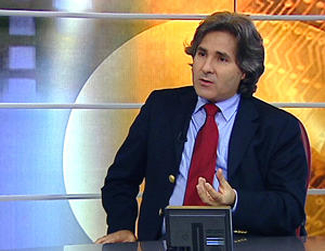 Futuro Presente
 Hitchens- political opinion maker
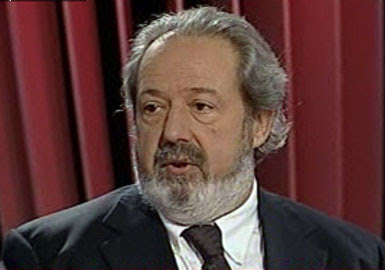 Jose Pacheco Pereira
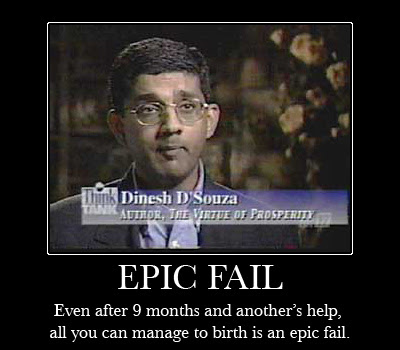 Dinesh D'Souza Christianity and Politics


 Seed Newsvine


 Oude Zak 000